— 1895 – 1986
Jiddu
Krishnamurti
“My only concern is to set man absolutely, unconditionally free.“
— J. Krishnamurti · 1929 · On dissolving the Order of the Star
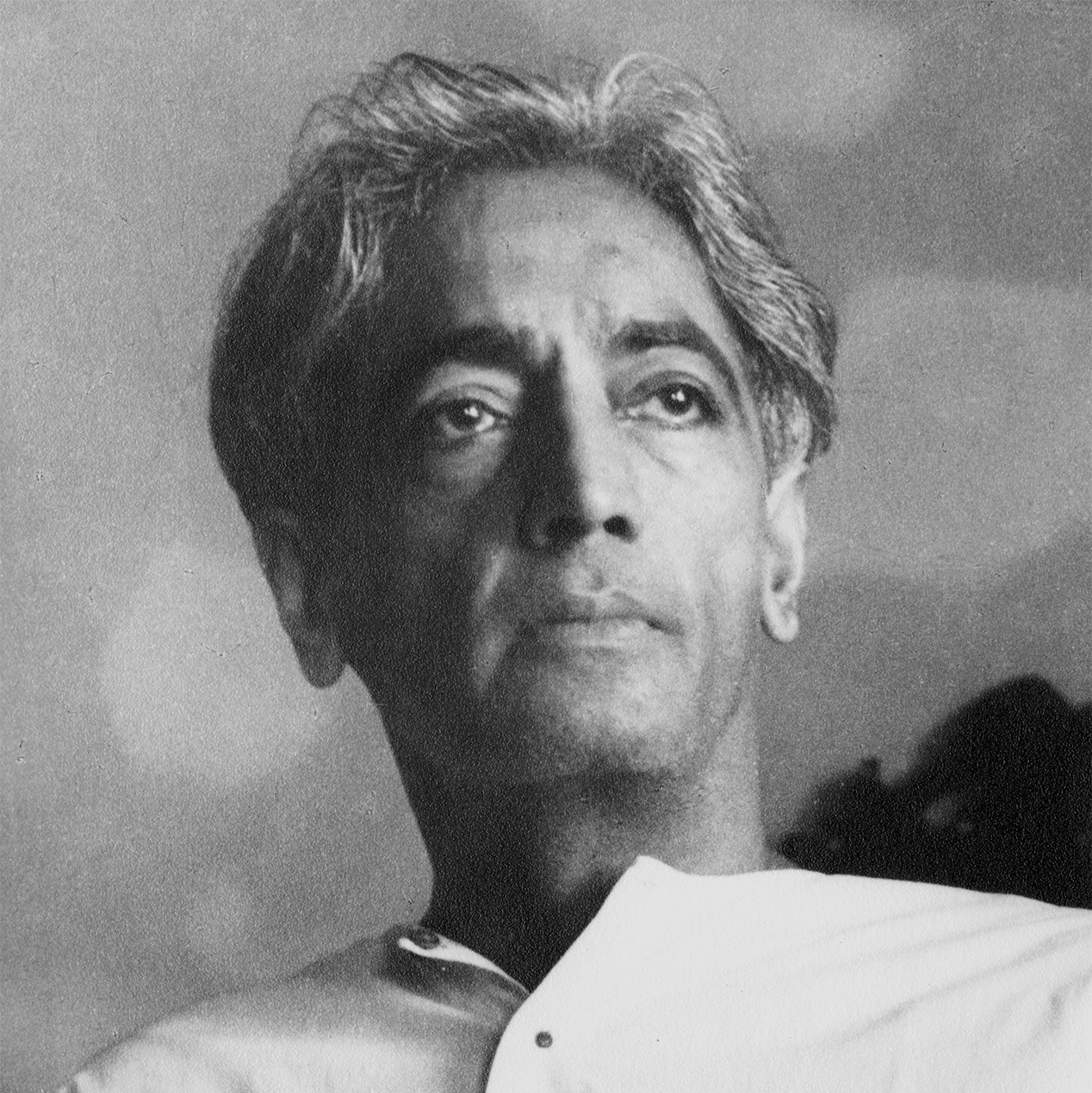

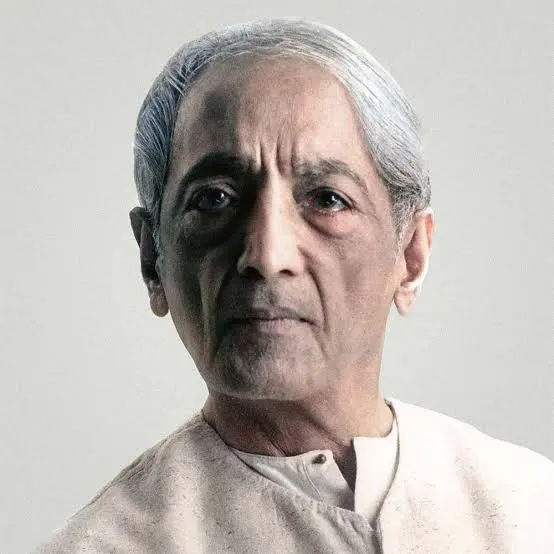
Krishnamurti, whose life and teachings spanned the greater part of the 20th century, is regarded by many as one who has had the most profound impact on human consciousness in modern times. Hailed as the World Teacher, he illumined the lives of millions the world over: intellectuals and laymen, young and old. He confronted boldly the problems of contemporary society and analysed with scientific precision the workings of the human mind. He gave new meaning and content to religion by pointing to a way of life that transcends all organized religions. Declaring that his only concern was to ‘set man absolutely, unconditionally free’, he sought to liberate human beings from their deep conditioning of selfishness and sorrow.
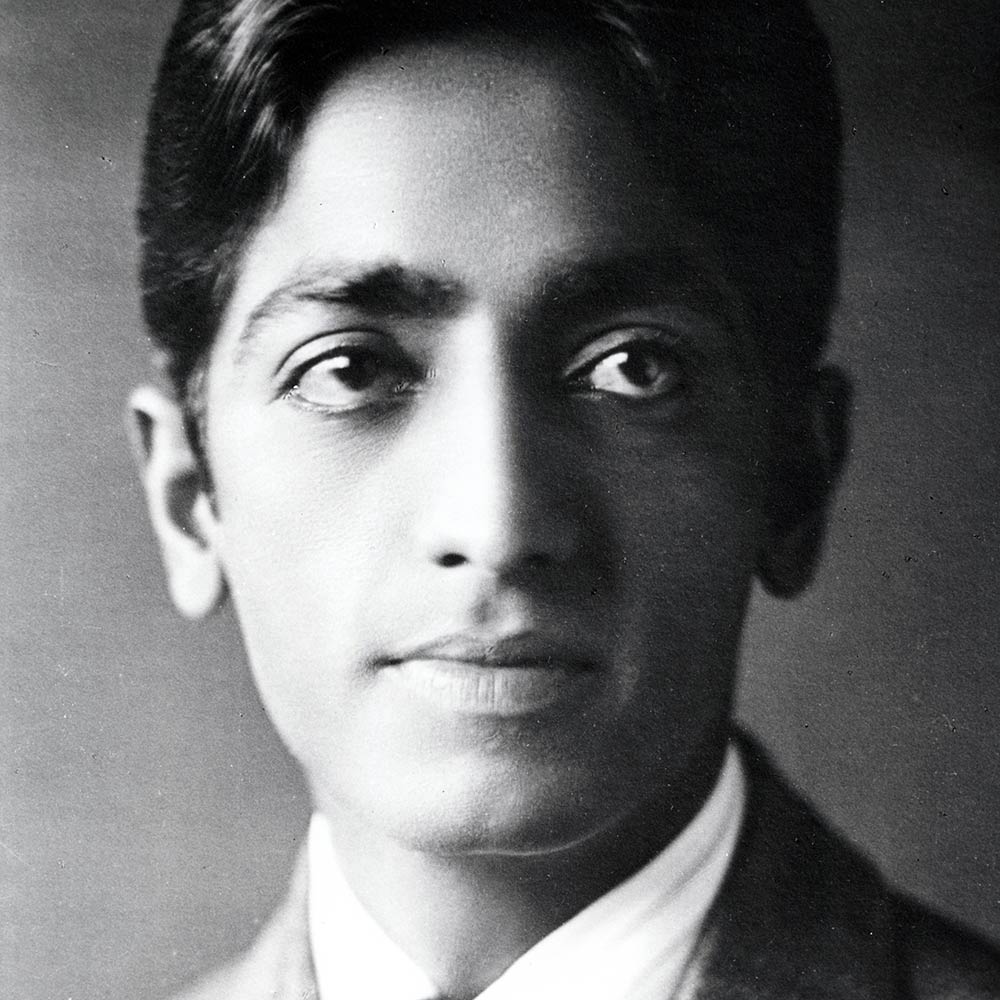
Jiddu Krishnamurti (11 May 1895—17 February 1986) was born into a pious middle-class family in the rural town of Madanapalle in south India. He was ‘discovered’ in his boyhood by the leaders of the Theosophical Society, Dr Annie Besant and C. W. Leadbeater, who proclaimed that he was the World Teacher for whom the Theosophists were waiting. However, he later dissociated himself from all organized religions and institutions and embarked on his solitary mission, meeting and talking to people not as a guru but as a friend.
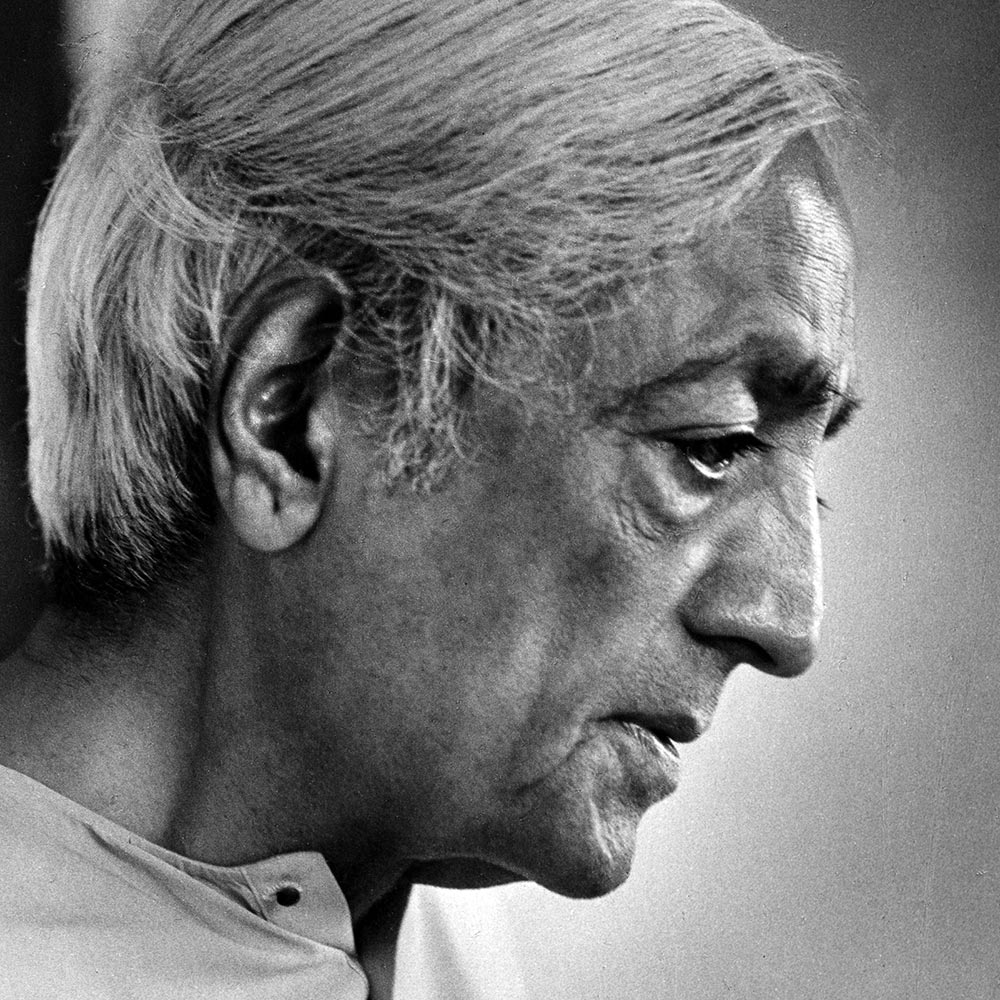
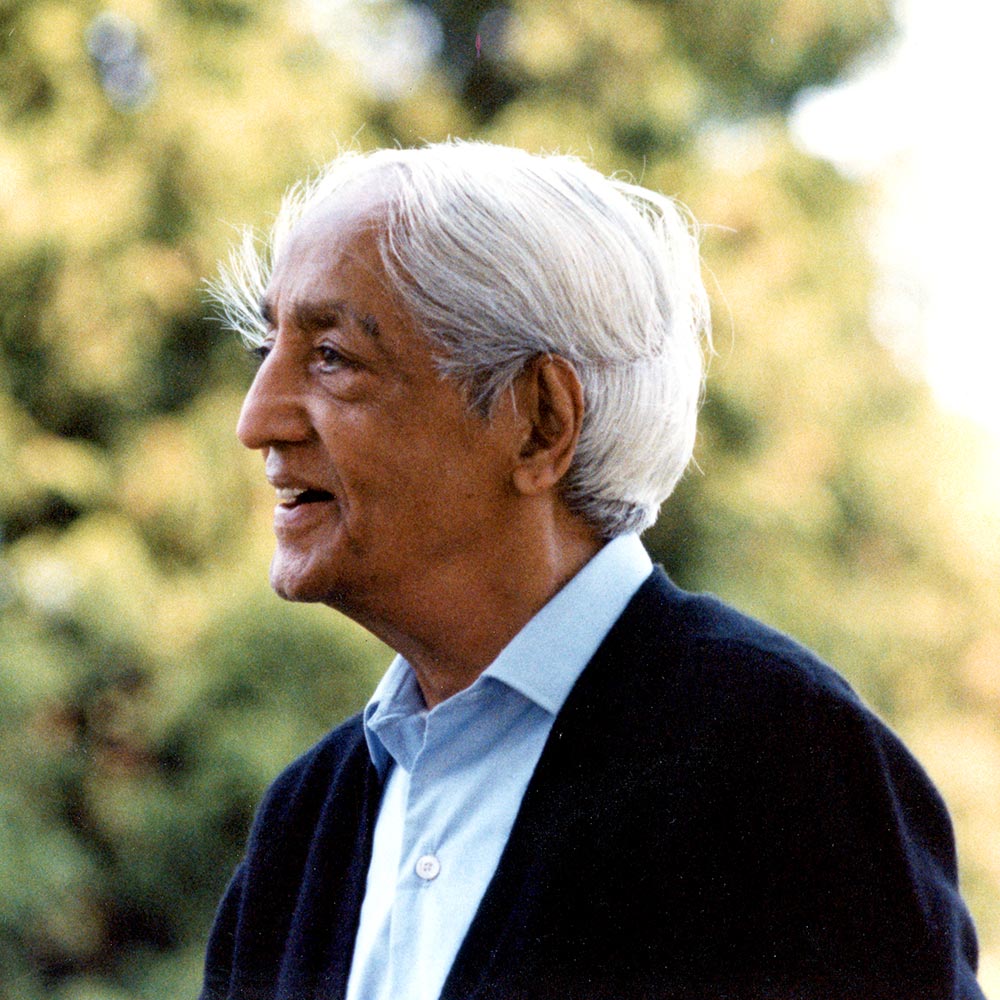
From the early 1920s till 1986, Krishnamurti travelled around the world until the age of 91, giving talks, writing, holding discussions, or sitting silently with those men and women who sought his help and advice. His teachings were based not on book knowledge and scholarship, but on his insight into the human condition and his vision of the sacred. He did not expound any philosophy, but rather talked about the things that concern all of us in our everyday lives: the problems of living in modern society with its corruption and violence, the individual’s search for security and happiness, and the need for man to free himself from his inner burdens of greed, violence, fear, and sorrow.
Although he is recognized both in the East and the West as one of the greatest religious teachers of all time, Krishnamurti himself belonged to no religion, sect, or country. Nor did he subscribe to any school of political or ideological thought. On the contrary, he maintained that these are the very factors that divide human beings and bring about conflict and war. Time and again, he emphasized that we are first and foremost human beings, that each one of us is like the rest of humanity and not different. He pointed to the importance of bringing into our daily life a deeply meditative and religious quality. Only such a radical change, he said, can bring about a new mind and a new civilization. Thus, his teachings transcend all man-made boundaries of religious belief, nationalistic sentiment, and sectarian outlook. At the same time, they give a new meaning and direction to modern man’s quest for Truth and for the sacred. His teachings, besides being relevant to the modern age, are timeless and universal.
— The Teachings
Central Concerns
“My only concern is to set man absolutely, unconditionally free.“
— J. Krishnamurti · 1929 · On dissolving the Order of the Star
Krishnamurti spoke to the same fundamental questions throughout sixty years of teaching — not as doctrine, but as a direct invitation to look.
— FREEDOM FROM CONDITIONING
“Without freedom from conditioning, humanity will always remain a prisoner and life will remain a battlefield.”
— The Whole Movement of Life is Learning
— THE NATURE OF THOUGHT
“Thought is so cunning, so clever, that it distorts everything for its own convenience.”
— Freedom from the Known
— Relationship & love
“To love is not to ask anything in return, not even to feel that you are giving something — and it is only such love that can know freedom.”
— J. Krishnamurti
— Death & time
“One is never afraid of the unknown. One is afraid of the known coming to an end.”
— J. Krishnamurti
— Meditation & attention
“Meditation is freedom from thought and a movement in the ecstasy of truth. Meditation is explosion of intelligence.”
— J. Krishnamurti
— Religion without belief
“I maintain that Truth is a pathless land, and you cannot approach it by any path whatsoever, by any religion, by any sect.”
— Dissolution speech · 1929
— PHOTOGRAPHS
A life
in pictures
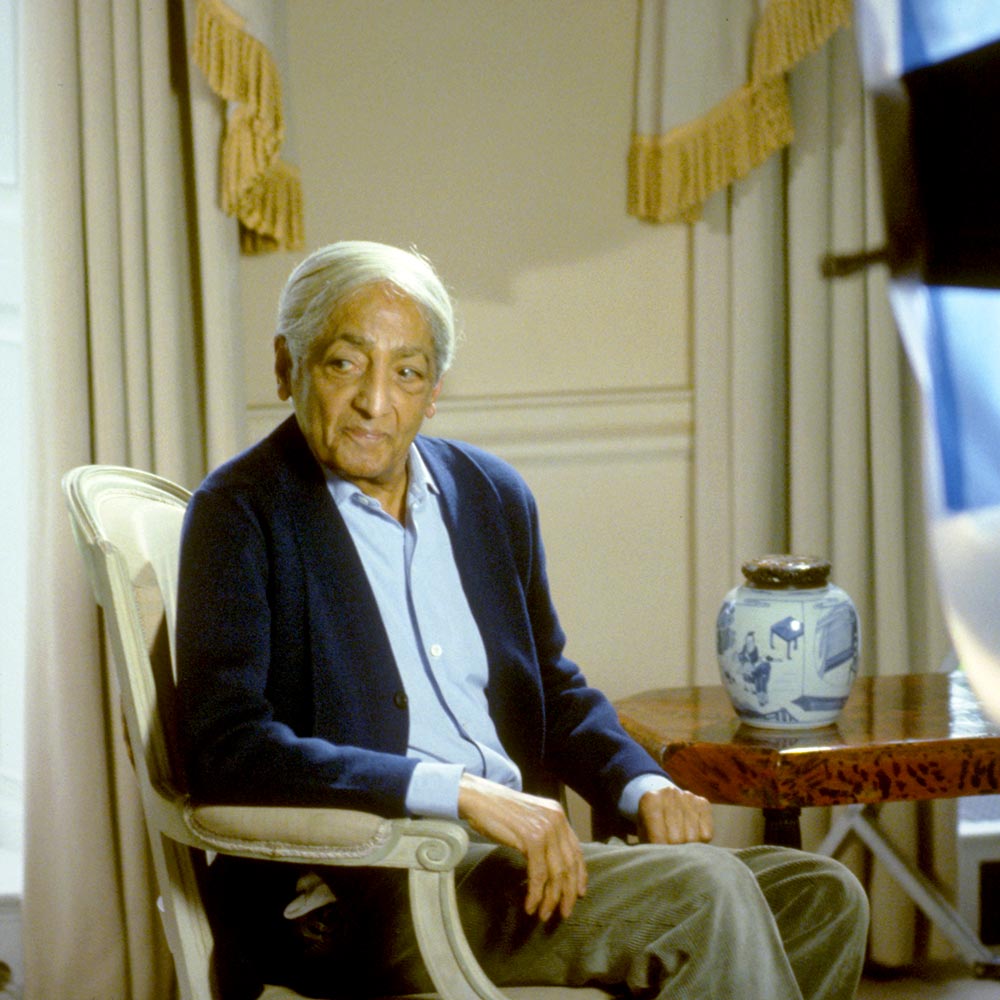
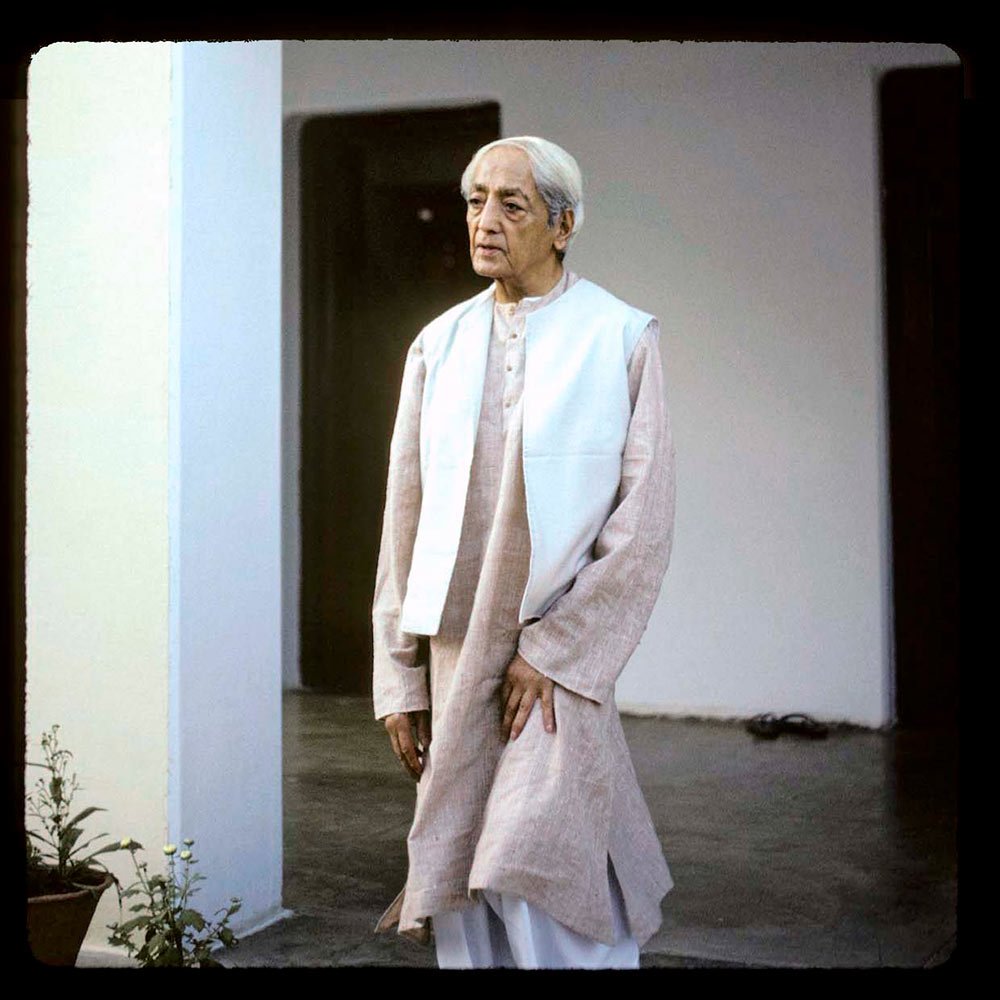
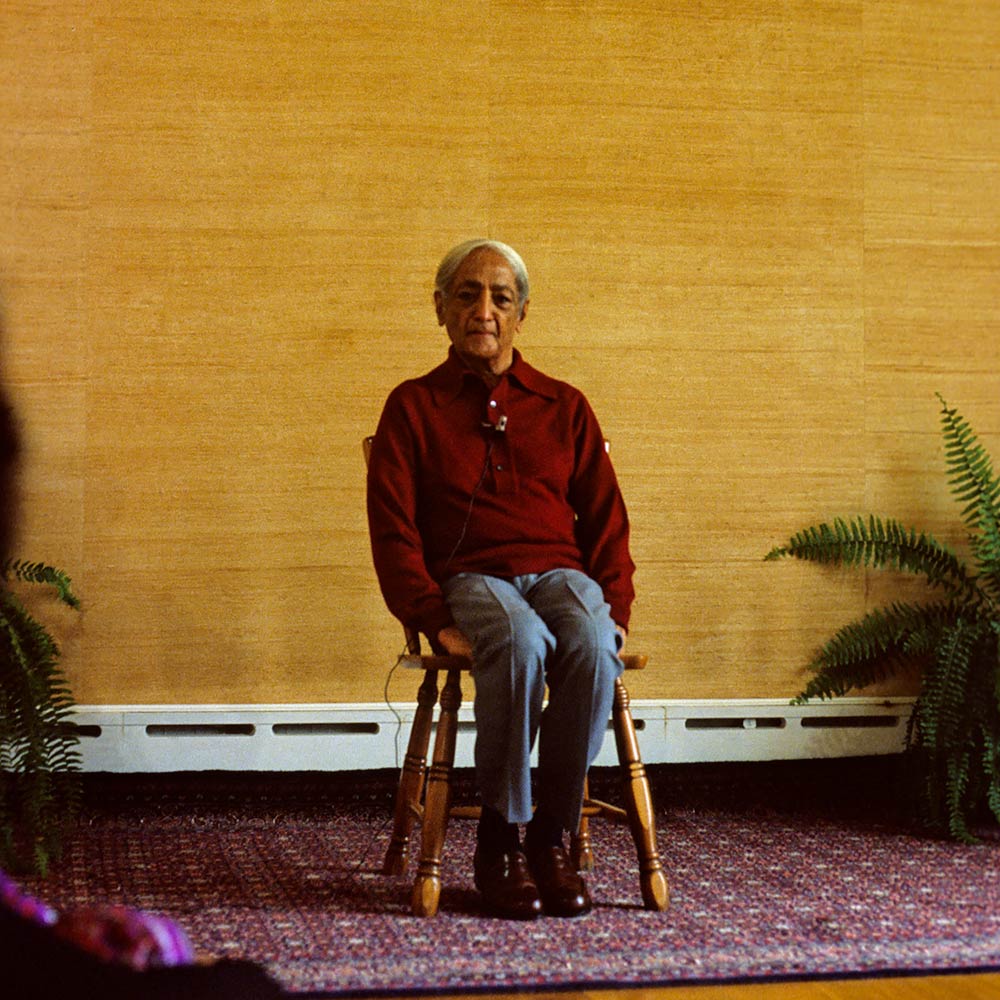
Selected photographs from across six decades of teaching and travel